Chemical anchoring is a critical technique in the construction industry, used to secure structural elements to concrete or masonry substrates. This method involves the use of chemical adhesives, typically epoxy or polyester-based, to bond anchors or rebars to the existing structure. Chemical anchoring provides superior load-bearing capacity and flexibility compared to traditional mechanical anchoring methods. This article explores the advantages, applications, process, and considerations of chemical anchoring in construction.
Advantages of Chemical Anchoring
- High Load-Bearing Capacity: Chemical anchors distribute load more evenly, providing higher pull-out resistance and ensuring that structural elements remain securely fastened.
- Versatility: Chemical anchoring can be used in a variety of substrates, including cracked and uncracked concrete, masonry, and natural stone. It is suitable for both horizontal and vertical installations.
- Corrosion Resistance: The chemical adhesives used in this process often have excellent resistance to environmental factors, including moisture and chemicals, which enhances the longevity and durability of the anchor.
- Ease of Installation: Chemical anchors can be installed quickly and easily, with minimal disruption to the existing structure. This makes them ideal for retrofitting and renovation projects.
- Flexibility: This method allows for close-to-edge and close-to-anchor installations without the risk of damaging the substrate, which is a common issue with mechanical anchors.
Applications of Chemical Anchoring
- Structural Reinforcement: Chemical anchoring is widely used to strengthen existing structures. This includes adding reinforcement bars (rebars) to concrete elements to increase their load-bearing capacity.
- Facade Installations: Heavy facades and cladding systems can be securely attached to building exteriors using chemical anchors, ensuring they remain stable and resistant to wind and other forces.
- Industrial Applications: In industrial settings, chemical anchors are used to secure heavy machinery, equipment, and safety barriers to the floor or walls, providing robust and reliable support.
- Bridge and Tunnel Construction: Chemical anchoring is essential in bridge and tunnel construction, where high load-bearing capacities and resistance to dynamic forces are required.
- Seismic Retrofitting: In regions prone to earthquakes, chemical anchors are used to retrofit structures, enhancing their ability to withstand seismic forces.
The Chemical Anchoring Process
- Drilling the Hole: The process begins with drilling a hole into the substrate. The diameter and depth of the hole depend on the size of the anchor and the requirements of the specific application.
- Cleaning the Hole: It is crucial to thoroughly clean the hole to remove dust, debris, and moisture. This ensures proper adhesion of the chemical adhesive to the substrate and the anchor.
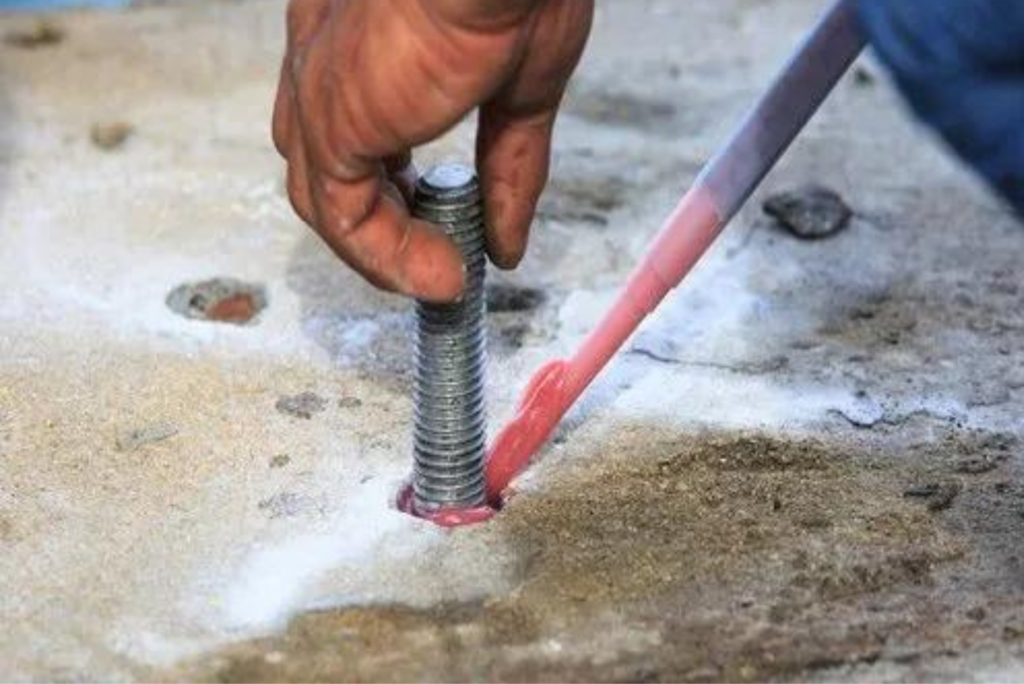
- Injecting the Adhesive: The chemical adhesive is then injected into the hole. Specialized dispensers are often used to ensure even distribution and prevent air pockets.
- Inserting the Anchor: The anchor or rebar is inserted into the hole filled with adhesive. It is essential to rotate the anchor slightly during insertion to ensure full contact with the adhesive.
- Curing: The adhesive is allowed to cure according to the manufacturer’s specifications. Curing times can vary depending on the type of adhesive, temperature, and humidity conditions.
- Load Application: Once the adhesive has fully cured, the anchor can bear loads. It is important to follow the manufacturer’s guidelines for maximum load capacities to ensure safety and stability.
Considerations When Using Chemical Anchoring
- Adhesive Selection: Choosing the right adhesive is crucial for the success of the anchoring process. Factors to consider include the type of substrate, load requirements, and environmental conditions.
- Hole Preparation: Proper hole preparation, including drilling and cleaning, is essential for ensuring optimal adhesion and load-bearing capacity.
- Curing Time: Adequate curing time must be allowed before applying any load to the anchor. Premature loading can compromise the bond and reduce the anchor’s effectiveness.
- Temperature and Humidity: Environmental conditions such as temperature and humidity can affect the curing process. It is important to follow the manufacturer’s guidelines to ensure proper curing.
- Quality Control: Regular inspections and testing should be conducted to verify the integrity and performance of chemical anchors. This includes load testing and visual inspections.
Conclusion
Chemical anchoring is a versatile and reliable method for securing structural elements in construction. Its high load-bearing capacity, ease of installation, and adaptability to various substrates make it an invaluable tool for modern construction projects. By understanding the advantages, applications, and proper procedures for chemical anchoring, construction professionals can ensure the safety and stability of their structures, leading to successful and long-lasting outcomes.